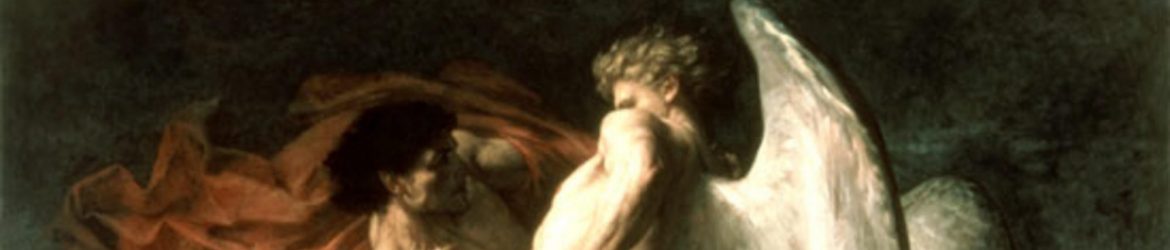

– 1 Corinthians 10:16-17
AS PART of my training for ordained ministry in the Methodist Church in Britain, I was recently invited to speak to a ‘Churches Together’ group – a local partnership where Christians from different traditions come together in worship, social action, and community outreach.
I was invited to speak about ‘Living ecumenically’. What follows is an edited version of that reflection.
Ecumenism simply means Christians of different traditions choosing to live, worship, and serve together as one body in Christ – even when we do not agree on everything.
But it is more than cooperation between institutions. It is about how we choose to relate to one another as followers of Jesus.
When we speak about living ecumenically, we are not just talking about structures, denominations, committees, documents, or covenants – though they have their place.
We are talking about how Christians choose to live together.
- in difference.
- in generosity.
- in love.
Not in agreement on everything, but in the decision to stay at the table. To stay, even when grace is stretching us.
And that image of the table matters deeply, because Jesus was always getting into trouble about who he shared tables with.
So, for me, living ecumenically begins with a few simple questions:
- Who is welcome?
- Who feels safe?
- Who has been missing from our tables – and why?
Those questions have shaped my faith, my ministry, and my vocation.
Ecumenism begins with family
The word ecumenism comes from the Greek oikoumene, meaning ‘the whole inhabited world’.
It shares a root with the word for ‘house’ or ‘family’.
To live ecumenically is to live together as one diverse household.
I come to this conversation not just as a minister-in-training, but as someone whose faith has been shaped by family – and across traditions.
I’m from a large Irish Catholic family. I grew up in London and attended Catholic schools until I was 18.
The year I was confirmed in the church where I was baptised as a teenager, my brother married a woman from a Church of England family. My parents called it a ‘mixed marriage’. The wedding took place in her church, with our parish priest joining in the celebration – unusual at the time.
There were complexities for them to navigate – that is their story to tell. But for me, it was an early glimpse of something important:
We often have more in common than we imagine.
Beyond the walls
At university, I volunteered with the Catholic society based in an ecumenical and multi-faith chaplaincy centre. I led fundraising and social justice initiatives and hosted a prayer group attended by Catholics and other Christians.
My degree included a module on biblical interpretation, where we studied translations approved by Catholic and Protestant churches from the 16th to the 20th centuries. It taught me how complex and careful the work of translation is – how faithfully and accurately rendering ancient texts into modern languages requires humility, scholarship, and sensitivity across vast cultural distances. In hindsight, that discipline of patient listening across difference was quietly shaping my understanding of Christian unity.
In the chaplaincy, I formed friendships with Christians from other traditions and with people of other faiths for the first time. It was there that an Anglican chaplain introduced me to St Ignatius of Loyola’s prayer of receiving from the Spiritual Exercises, awakening a love of Ignatian spirituality that continues to sustain me.
After graduation I trained as a primary school teacher, and volunteered on a playscheme in Belfast designed to bring children ‘across the barricades’ together. One child once asked me, ‘How come you sound like the soldiers?’ It was the first time he had met someone with a British accent who wasn’t in military uniform.
That question revealed how easily we associate difference with threat.
Around the same time, I encountered the Focolare Movement – a global fellowship born in wartime Italy, committed to unity through dialogue and relationship. It takes its name from the Italian word for ‘hearth’ or ‘fireplace’ and describes itself as ‘a large and varied family’.
Though I felt most at home in one tradition, something in me was already reaching beyond its walls.
When belonging feels complicated
After teaching for three years, I began training for ordination as a Catholic priest.
I loved the tradition. I felt called. There was even talk that I might return to teach at the seminary after ordination.
But cracks began to show.
As I confided in my spiritual director about struggling with my sexuality, he gently helped me begin to let go of shame and judgement. I had been driven by the belief that God had ‘saved’ my life, and so I needed to repay that gift.
But that is not how grace works:
- It is not a repayment.
- It is a gift.
- It is not – and cannot be – earned.
The image of God I was carrying- and the image of myself – had become entangled with fear and self-erasure. I believed that holiness required diminishment, that faithfulness meant suppressing parts of myself in order to deserve love.
But grace does not demand our disappearance.
It restores us to ourselves.
The foundation I was building was not strong enough to sustain a lifetime of ministry in that context. So, with my spiritual director’s support, I left.
It did not feel like triumph. It felt like loss. But in hindsight, it was also an act of trust – trust that God’s grace was larger than the narrow story I had been telling about myself.
Afterwards, I joined an ecumenical L’Arche community, supporting adults with learning disabilities. Then I lived with a religious community who sent me on retreat to discern my next steps.
I left that community, and I left church altogether for a while.
I had learned what it feels like to love the Church – and yet not feel fully loved back.
One of the threads that drew me back was the Ignatian spirituality centre where I spent my retreat before leaving the religious community. They had quietly hosted ecumenical retreat weekends for LGBT+ Christians since 1991 – long before it was ‘cool’!
I joined one of those weekends in 2001. It became part of the rhythm of my year for more than a decade. In 2019, I was invited to join the ecumenical team that now leads that retreat weekend.
Holding that space for others has been a profound privilege – because it once held me.
The unity we live before we recognise it
When I moved to Liverpool in 2003, I discovered a lively city-centre ministry involving Methodists, Quakers, URC folk, Catholics, Anglicans, and more.
Liverpool City Centre Methodist Church – known as ‘Somewhere Else’ or the ‘Bread Church’ – gathered to make and share bread alongside prayer and fellowship. People came from across traditions and across differences, from members of the city’s L’Arche community and LGBT+ Christian groups to the Big Issue seller at the door.
What sustained me and called me back to church was not loyalty to a denomination but people – of many traditions and none – who gathered to eat, pray, and love.
That experience taught me something essential:
The unity of the Church is often lived before it is formally recognised – in kitchens, chapels, retreat houses, and shared bread.
Ecumenism, for me, has never been theoretical.
It has been about survival. About grace. About discovering that God’s welcome is wider than our fears – and wider than the walls we build to protect them.
‘Will it be “Open Table”?’
In 2007 I met the man who would become my husband at an LGBT+ Christian group meeting at the Bread Church.
In 2012, we celebrated our relationship with a civil partnership. As marriage was not legal for same-sex couples in England then, we wrote our own service without traditional language associated with marriage. We made promises – not vows – and made a covenant with one another and God. We didn’t just ask for God’s blessing. We received it.
By then, a simple but radical question began shaping our experience of church and ministry:
- What if LGBT+ people could encounter Christ without having to defend their existence?
From that question, the Open Table Network was born.
What began as a group of six LGBT+ Chrristians from different traditions in 2008 has become a network of Christian communities hosted by inclusive churches, drawing people from multiple denominations. It is centred on hospitality, worship, and shared life experience.
At Open Table:
- You don’t have to agree on everything.
- You don’t have to explain yourself.
- You don’t have to fit a mould.
- You simply come – and you are welcomed.
The table becomes a place of reconciliation – not because we are the same, but because Christ is already present, holding us together.
Open Table simply gave shape to what many Christians were already doing quietly: offering welcome where others hesitated, and choosing relationship over suspicion.
Until churches consistently offer that depth of welcome for all LGBT+ Christians, Open Table will continue to exist – not as a protest, but as a gift.
More than welcome
Many churches display signs saying, ‘All Are Welcome.’
It is a beautiful phrase. It should be simple.
But for many LGBT+ Christians, welcome can feel conditional, cautious, or complicated.
That is why Open Table speaks of being ‘More Than Welcome’.
Not tolerated.
Not managed.
Not quietly included.
But safe.
Affirmed.
Belonging.
And I have seen that transformation:
People returning to faith after years, even decades, away.
Not because someone convinced them, but because someone welcomed them:
- Shame replaced with joy.
- Isolation replaced with community.
- Silence replaced with testimony.
That is not just pastoral care.
That is the gospel at work.
Grace before agreement
The Methodist tradition speaks of ‘prevenient grace’ – the grace of God that comes before we respond to God, preparing our hearts.
At the table:
- belonging comes before belief.
- grace comes before understanding.
- relationship comes before resolution.
That pattern is not innovation. It is incarnation. Because that is how Christ meets us.
Paul writes:
‘When we eat the bread we break, isn’t that sharing in the body of Christ? By sharing in the same loaf of bread, we become one body, even though there are many of us.’
– 1 Corinthians 10:16-17 (Contemporary English Version
When we share bread, we proclaim that Christ’s body is not fractured by our divisions – even when our institutions are.
That is profoundly ecumenical.
Staying at the table
Living ecumenically means asking brave questions:
- Where are we already walking together?
- Who feels welcome in our shared spaces?
- Who is missing – and what would it cost us to notice?
Ecumenism is not about losing identity.
It is about discovering that our deepest identity is in Christ.
It is not about erasing difference.
It is about refusing to let difference become division.
The question is not whether we agree on everything – but whether we trust Christ enough to remain at the same table, trusting his grace to hold us there.
Recent comments