
ON SUNDAY I was invited to share a reflection as part of the online worship of Shoreline Methodist Community in the UK.
This week Christians celebrate the Feast of the Transfiguration, while the world also marks the eighty-first anniversary of the atomic bombings of Hiroshima and Nagasaki. At first glance these events could hardly seem further apart. One is a story of dazzling glory on a mountain; the other of unimaginable devastation beneath a mushroom cloud.
Yet, reflecting on them together led me to ask what they reveal about God, humanity and our calling as followers of Christ. This is an adapted version of the reflection I shared. It is based on two Bible readings: Luke 9:28-36 and 2 Corinthians 5:16-6:2.
On my desk sits a small white paper crane.
Folded from a single square of paper, it is fragile. It weighs almost nothing. And yet this little bird has come to carry an enormous weight of human longing: a longing for peace.
This week, as Christians celebrate the Feast of the Transfiguration, the world also remembers two terrible flashes of light: the atomic bombs dropped on Hiroshima on 6 August 1945, and Nagasaki three days later.
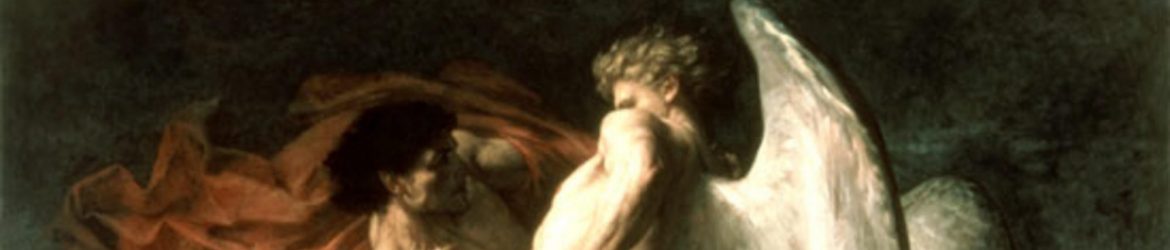
At the Transfiguration, dazzling light reveals Christ in glory.
At Hiroshima and Nagasaki, dazzling light brought death and destruction to people made in the image of God.
And between those two images of light stands a small paper crane.
The paper crane became a symbol of peace through the story of Sadako Sasaki.
Sadako was two years old when the atomic bomb was dropped on Hiroshima. She survived the explosion, but years later developed leukaemia because of exposure to radiation.
While she was in hospital, Sadako began folding paper cranes, inspired by a Japanese tradition that says anyone who folds a thousand cranes will be granted a wish.
Sadako died in 1955, aged just twelve. But the paper cranes she folded became a symbol of her longing:
- for healing
- for hope
- and for a world without nuclear weapons.
Eighty-one years after the bombing of Hiroshima and Nagasaki, that longing remains, represented by this origami crane.
And this year, as I reflect on the bombing of Hiroshima on the feast of Christ’s Transfiguration, I am struck by the contrast between those two flashes of light.
In Luke’s Gospel, Jesus takes Peter, James and John up a mountain to pray. And there, something extraordinary happens.
The appearance of Jesus’ face changes, his clothes become dazzling white, and the disciples glimpse who Jesus truly is.
They see the glory of God. And then a cloud overshadows them, and they hear God’s voice:
‘This is my Son, my Chosen; listen to him!’
It is a moment of revelation, in which the ordinary is transformed and the disciples see Jesus – and maybe the world – differently.
On 6th August 1945, there was another dazzling light. At 8.15 in the morning, the atomic bomb exploded above Hiroshima. Tens of thousands of people were killed immediately. Many thousands more died later from burns, injuries and radiation.
Three days later, another atomic bomb was dropped on Nagasaki, killing tens of thousands more.
In 1965, on the twentieth anniversary of the Hiroshima bomb, George MacLeod, the founder of the Iona Community, described Hiroshima as a ‘cosmic Golgotha’.
Golgotha is the Aramaic name for the hill in ancient Jerusalem which the occupying Roman forces used as a place of execution. It was where Jesus was crucified. The Hiroshima bomb, for McLeod, was ‘a cosmic Golgotha’ because it was the place of execution of more than 100,000 people in one day.
MacLeod saw the bombing of Hiroshima as a kind of reverse Transfiguration:
- On the mountain, a flash of light reveals the glory of God in a human life.
- At Hiroshima, a flash of light reveals what humans are capable of doing to one another.
- One reveals the possibility of transformation towards life.
- The other reveals the terrible possibility of transformation towards death.
And between these two possibilities lies a question for humanity:
What kind of world are we creating together?
The Transfiguration does not end on the mountain.
Peter wants to stay there. He wants to build shelters and hold on to the experience.
But Jesus leads the disciples back into the world, into human need, towards Jerusalem, and ultimately the cross.
The glory they have glimpsed is not an escape from the world. It changes how they are called to live within it.
That’s what matters when we remember Hiroshima and Nagasaki. Remembrance alone is not enough.
It is right to remember those who died, to lament the devastation caused by nuclear weapons, and by all violence and war.
But Christian remembrance asks more from us.
In his second letter to the Corinthians, Paul writes that God has reconciled us to Godself through Christ and has given us the ministry of reconciliation. This is not just an ideal to aspire to, but a ministry entrusted to us. We are called, Paul says, to be ambassadors for Christ.
Peace is not something Christians hope and pray that other people will create. Peace is part of our calling.
The Methodist Church, in its report on A Justice-seeking Church, asks:
‘How do we decide what to do in response to injustice?’
Or, more simply:
‘What is ours to do?’
I invite us all to make that question personal:
‘What is mine to do?’
I wonder if our paper crane might help us find our own answer.
It is:
- A symbol of peace.
- A symbol of hope.
But perhaps also a question. Faced with
- the bombing of Hiroshima and Nagasaki;
- violence, war, and the continuing threat of nuclear weapons;
- and Jesus revealed on the mountain as God’s beloved Son:
What is mine to do?
Perhaps it is to pray for peace. Or maybe to learn more about Christian peace-making and nonviolence.
Perhaps it is to write to your MP, support a campaign, attend a vigil or join an act of public witness.
Or could it be to challenge the language of violence when we hear it?
Perhaps it is to seek reconciliation in a relationship much closer to home.
Or to connect with others already working for peace. We might do this through the Methodist Peace Fellowship, which brings together Methodists committed to the way of love and the rejection of violence, as part of the wider Fellowship of Reconciliation – Christians working together for peace, justice and nonviolence.
Whatever else you may choose to do, there is one very simple thing we might all do this week.
From the 6th to the 9th of August, people around the world are being invited to take part in the Cranes For Our Future campaign.
The invitation is to fold a paper crane, take a photograph of it, and share it on social media with the hashtag #CranesForOurFuture, along with a message about what motivates you to work for a safer, more peaceful future.
As we fold our cranes, perhaps we might reflect on what motivates us to work for a safer, more peaceful future.
None of us, on our own, can bring peace to the whole world. But that does not mean there is nothing we can do.
- Sadako folded cranes because she hoped things could be different.
- The Transfiguration tells us that, in Christ, things can be different.
- Paul tells us that God has entrusted to us the ministry of reconciliation.
So the question this little crane leaves with us is:
What is mine to do for peace?
May God give us the courage to discover our answer – and the grace to do it.
Further reading:
This online reflection grew out of a sermon I preached at Wesley Church Centre, Chester, in 2025 to mark the 80th anniversary of Hiroshima. While this year’s reflection has taken a different direction, readers may also be interested in that earlier piece which explores George MacLeod’s theology in the context of the Iona Community, and the moral challenge of nuclear deterrence:
Transfiguration and Hiroshima: A reflection on peace (2025)
Recent comments