
YESTERDAY I had the privilege of preaching at a service on the final residential weekend of the academic year for part-time ministry students at The Queen’s Foundation, an ecumenical theological college in Birmingham.
The service commemorated an event that many Christians have never heard of: the consecration of Martin of Tours as Bishop of Tours, in what is now France, on 4 July 372 CE. The main feast day of St Martin of Tours is 11th November, the anniversary of his death in 397 CE, but it is often overlooked since it coincides with Remembrance Day.
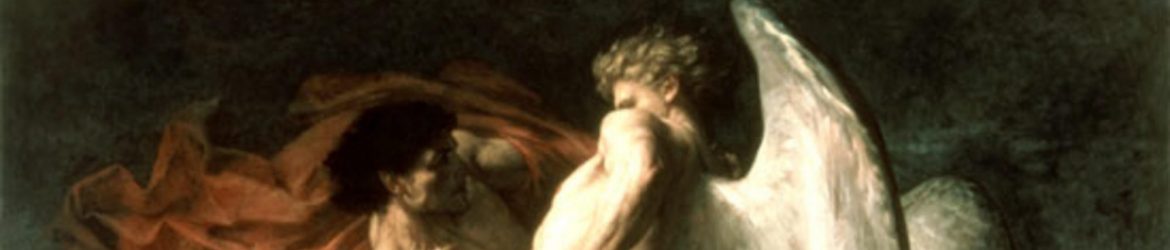
Martin was a young Roman soldier. Although he had become a Christian, he was not yet baptised. One winter day he encountered a man who was poor, cold and almost naked outside the city gates.
Martin had no money to give him. Instead, he drew his sword, cut his military cloak in two, and gave half of it to the stranger.
That night Martin had a dream. Christ appeared wearing the half-cloak and said to the angels, ‘Here is Martin, the Roman soldier. He has clothed me.’
It was one of the experiences that confirmed the faith into which Martin was still growing.
The story has been told for more than sixteen centuries. Unlike many early saints, we know a remarkable amount about Martin because one of his contemporaries, Sulpicius Severus, wrote his biography while Martin was still alive. It is also the reason Martin became the patron saint of chaplains, and why we use the words chaplain today, from the Latin cappa for cloak. The place where Martin’s half of the cloak was preserved as a relic after his death became know as the capella, which is the origin of the word ‘chapel’.
This story also reminds us that Christian ministry, at its best, is rooted in compassionate service, not power or status.
As I prepared my sermon, however, I found myself returning to something I had written about several years ago, when I first reflected on this story in a post about chaplaincy.
Martin didn’t give away the whole cloak. He kept half for himself.
There is a tendency, especially in ministry, to imagine that faithfulness means giving everything until there is nothing left. Many ministers, chaplains, carers and volunteers know what it feels like to keep saying yes until they are exhausted.
Martin tells a different story. His generosity was wholehearted, but it was also sustainable.
Jesus tells us that the second most important commandment, after whole-hearted love for God, is to love our neighbours as ourselves (Mark 12:29-31). Not more than ourselves. Not less than ourselves. As ourselves.
I don’t think Martin kept half his cloak because he lacked compassion. I think he understood that we cannot continue to care for others if we leave ourselves with nothing.
This story has resonates so strongly for so long because it sounds remarkably like Jesus’ words in Matthew 25:
‘I was hungry and you gave me food… I was a stranger and you welcomed me… I was naked and you gave me clothing.’ [Matthew 25.31-40]
In that story, no-one recognises Jesus.
Both the righteous and the unrighteous ask the same question:
“Lord, when was it that we saw you?”
Martin didn’t recognise Jesus either. He thought he had found a beggar. In fact, Christ had found Martin.
That may be one of the greatest lessons for ministry. We can spend a great deal of time wondering where we will find God, while Jesus tells us that he is already present in the people we are sent to serve.
The first reading at yesterday’s service came from the prophet Isaiah:
‘The Spirit of the Lord is upon me… because he has sent me to bring good news to the poor.’ [Isaiah 61.1-3]
Notice where the Spirit sends God’s people. Not towards status, success or recognition, but towards people: those who need hope, healing, justice and compassion.
This echoes the reason we remember Martin on 4th July. According to his biographer, this was the day he was consecrated Bishop of Tours.
The people wanted Martin to become their bishop. Martin wasn’t so sure.
He tried to avoid the appointment altogether. He would have preferred to stay living quietly as a monk. He even tried to hide when the people came looking for him, reluctant to accept what lay ahead.
He knew the cost of leadership and the responsibility it would bring.
I take great comfort from that, because I know something of Martin’s reluctance.
I’ve often bargained with God:
‘Who God, me, God? Ordained, God? No, God!’
Responding to God’s call rarely comes with complete certainty. More often it comes with questions, hesitation and the hope that perhaps God might ask someone else instead.
Yet what strikes me most about Martin’s story is this.
God did not wait until Martin felt ready before calling him. God doesn’t wait for us to feel completely ready either.
Long before he became a bishop, even before he was baptised, he had already begun to live his vocation, by recognising Christ in someone who needed him.
That makes me wonder whether vocation begins much earlier than we often imagine, with recognising Christ in the hungry, the stranger, the lonely, and the forgotten. It’s not our job to bring Christ to them, but to recognise Christ in them and help them to know Christ too.
Yesterday’s psalm was Psalm 91, sung as On Eagle’s Wings. It reminded us that the God who sends us is also the God who holds us. The calling to love our neighbour is never a summons to burnout. The God who sends us into the world also promises to accompany us there.
Recent comments